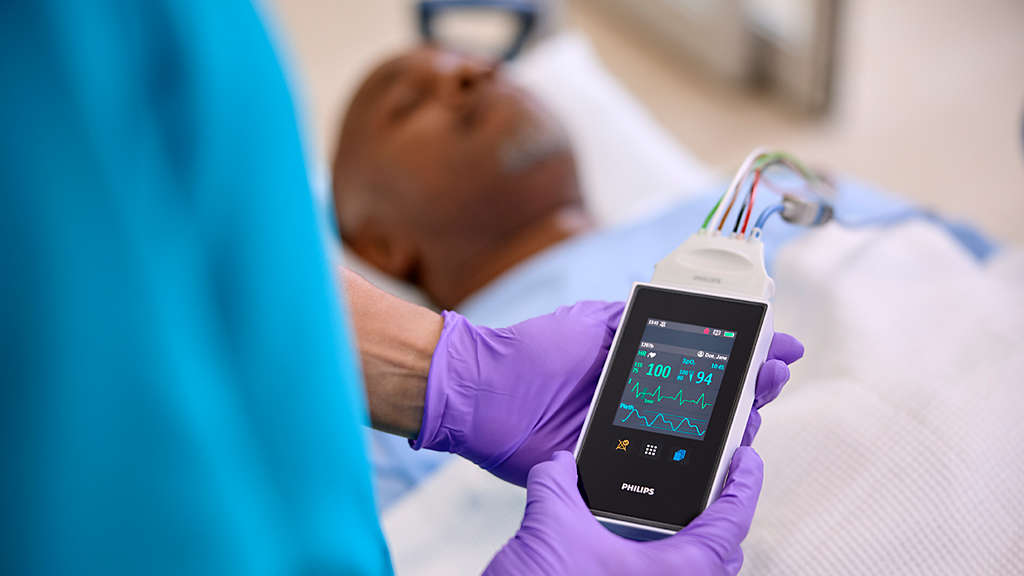

In most hospitals, the question “where is the equipment?” is answered the same way it has been for decades: by asking someone, checking a whiteboard, or walking the floor. This approach works until it doesn’t — which, in a busy clinical environment, is several times a shift. A recent survey of hospital biomedical and nursing staff found that equipment search time accounts for a significant portion of non-clinical work hours every week, with patient monitors, infusion pumps, and telemetry transmitters consistently ranking as the most frequently misplaced device categories.
Passive asset tagging technology addresses this problem directly, and its adoption in hospital equipment management programs has accelerated substantially over the past several years. Understanding how passive tagging works — and why it outperforms the alternatives — is useful context for any facility evaluating options to reduce equipment loss and improve availability at the point of care.
How Passive Tag Technology Works
Passive asset tags are small, durable devices attached directly to managed equipment. Unlike active RFID tags, which contain their own power source and continuously broadcast location signals, passive tags have no battery. They respond to radio frequency signals from reader infrastructure installed throughout the facility — typically positioned at corridor intersections, unit entrances, and storage areas. When a tagged device passes within read range of a reader, the system logs the device’s location and timestamp.
Modern passive tag systems achieve read ranges of up to 25 feet, which is sufficient to track equipment through walls and across floors without requiring direct line-of-sight. This means a pump stored in a supply room adjacent to a patient corridor can be located accurately without the reader needing to be in the same room — a practical advantage in the dense, room-partitioned layouts typical of hospital floors.
Why Passive Tags Outperform the Alternatives
Active RFID and Bluetooth-based real-time location systems (RTLS) offer continuous location updates and higher accuracy, but they come with correspondingly higher infrastructure and maintenance costs. For facilities managing large fleets of movable equipment across multiple units, the cost per tag and the infrastructure investment required for full active RTLS coverage can be prohibitive.
Passive tag systems occupy a practical middle ground. They provide sufficient location granularity — typically room-level or zone-level accuracy — to eliminate the vast majority of equipment search time, while requiring significantly less infrastructure investment than full active RTLS. Tags themselves require no maintenance and no battery replacement, reducing the ongoing operational cost of running the program.
Manual methods, including barcode scanning and periodic physical audits, require staff to actively log equipment locations, which means location data is only as current as the last scan. In a high-turnover clinical environment, that data can be hours or days out of date — too stale to be useful when a nurse needs a specific device immediately.
Operational Benefits Beyond Equipment Search
The most visible benefit of passive asset tracking is the time saved searching for equipment — but the operational advantages extend further. Preventive maintenance compliance improves significantly when biomedical teams can locate any device in the fleet instantly, rather than spending part of every PM cycle tracking down devices that have migrated from their assigned locations. Recall management, which requires locating specific serial numbers quickly, becomes a same-day process rather than a multi-day effort. Equipment loss — devices that leave a facility and are never returned — is reduced when location data establishes a clear record of where equipment was last seen.
For nursing staff, the reduction in equipment search time has a secondary effect that is harder to quantify but consistently reported: reduced workload-related stress. When clinical staff can find what they need quickly, the operational friction that degrades both job satisfaction and care quality diminishes. Asset tracking technology, when implemented effectively, is as much an investment in staff experience as it is an investment in equipment management efficiency.